
Schenectady County Sex Offender Checks
The first source for a Schenectady County registry check is the New York State Sex Offender Registry, maintained by the Division of Criminal Justice Services. It publishes the information that state law permits for Level 2 and Level 3 registrants. Searchers can use a name, Schenectady County, or a ZIP code. Level 1 records receive less public disclosure and normally require the separate DCJS telephone process. The local sheriff and police agencies register and verify residents, but Schenectady County does not publish a distinct county registry that replaces the state source.
Before searching, note the person's name and any reliable place detail. Compare the result's photo, age, aliases, and registered locality instead of relying on a matching surname. The profile is a statutory notice, not a live account of where someone stands at each moment. Custody flags, a move, a court ruling, or an agency update may affect what appears. For broader criminal record context outside registration, use the county's criminal history overview and the office that holds the source record.
The official registry gateway shows the state starting point used for Schenectady County searches.
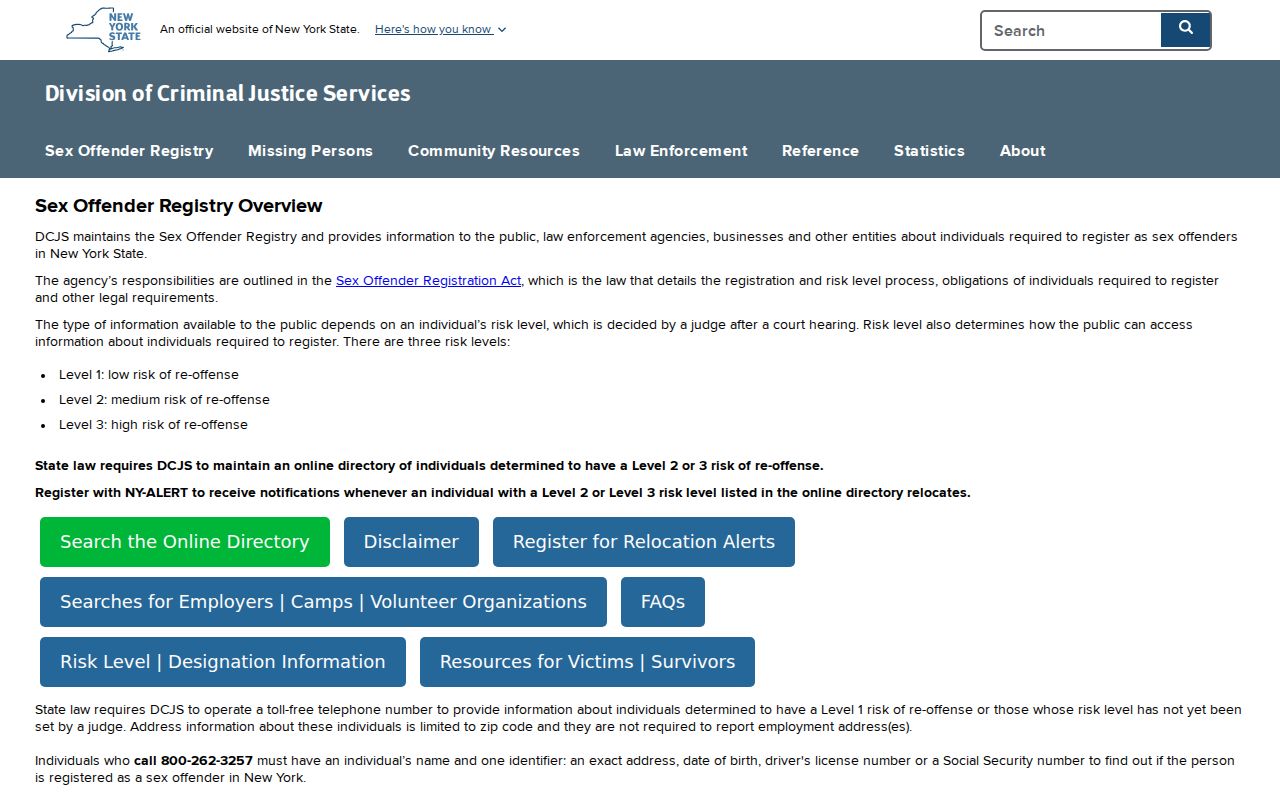
That gateway keeps the county search tied to DCJS rather than an unofficial list whose update cycle cannot be checked.
Schenectady County Level 1 Calls
A blank internet result does not prove that no registration record exists. New York limits Level 1 information, so DCJS provides a statutory telephone channel. Call 800-262-3257 from 8 a.m. to 4 p.m. on weekdays other than legal holidays. The caller must be at least 18 and give their own name, address, and telephone number. DCJS also requires the subject's name plus a strong identifier, such as an exact address, date of birth, driver-license number, or Social Security number. The inquiry is free, and DCJS does not take it by email.
This route also covers a person whose risk level is still pending. It is more exact than trying many loose name spellings in the public directory. Share sensitive identifiers only through the official phone channel, not in a broad records request. Schenectady County law enforcement may explain a local compliance concern, but the DCJS line controls this limited registry disclosure.
The DCJS Level 1 information page sets out the caller and identity rules.
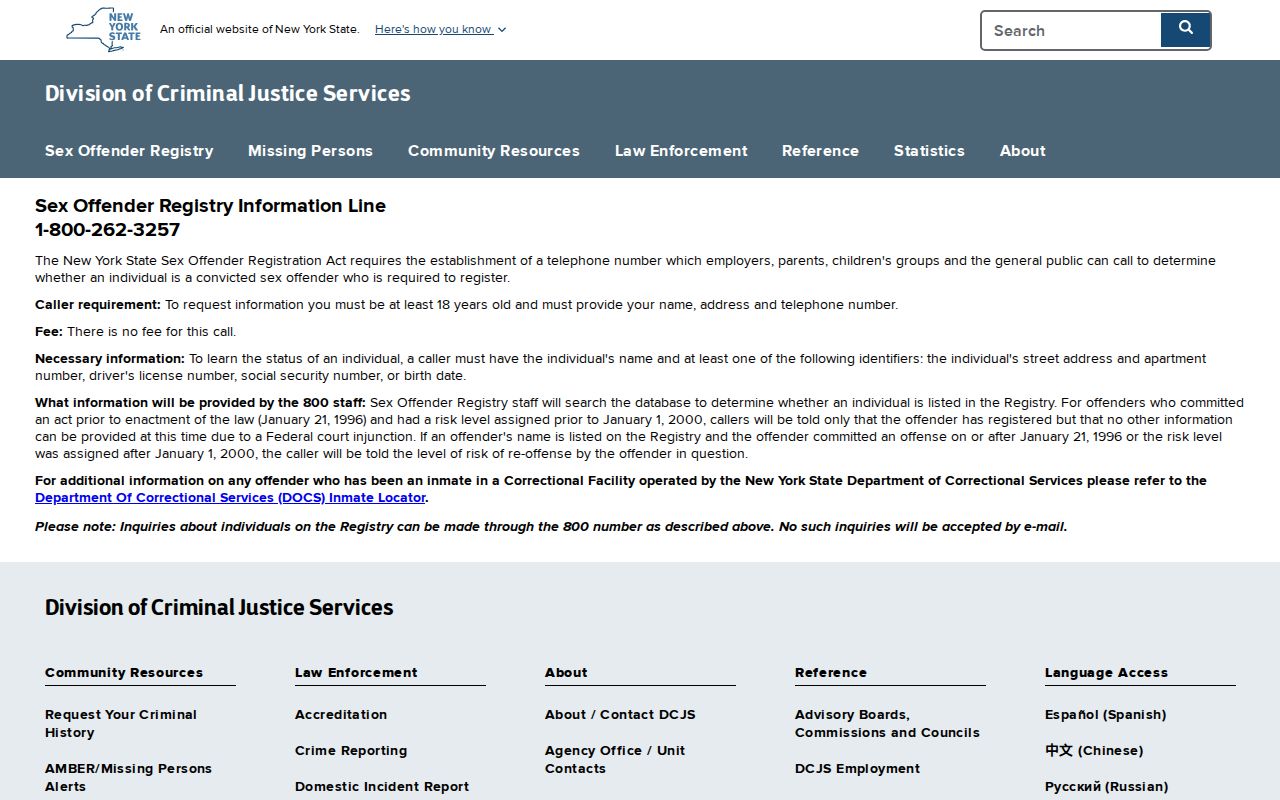
The phone process explains why an internet-only Schenectady County search can be incomplete even when the search itself works.
New York State Sex Offender Registry Searches
The state form offers three practical paths: a name search, a county search, or a ZIP search. It does not offer an address-radius field. Filters can remove people shown as incarcerated, in ICE custody, or in other custody, but switching on those filters can hide a listing relevant to a broader Schenectady County check. Use the unfiltered result first when the aim is to confirm a record, then narrow it if the list is too broad.
- Open the official DCJS registry and choose the name or geographic search path.
- Enter a surname and first name, or select Schenectady County or a known ZIP code.
- Choose custody exclusions only when they fit the reason for the search, then complete the CAPTCHA.
- Open a likely profile and compare several identity fields before drawing any conclusion.
| Field or control | Type | Required | Use in a Schenectady County search |
|---|---|---|---|
| Search type | Tab or link | Yes | Choose name, location, or county directory path. |
| Last name | Text | For name search | Use the known surname; verify a match with other fields. |
| First name | Text | No | Narrows a common surname. |
| County | Dropdown | Alternative | Select Schenectady from the New York county list. |
| ZIP code | Text | Alternative | Searches that ZIP, not an address radius. |
| Custody exclusions | Checkboxes | No | May remove incarcerated, ICE, or other custody listings. |
| CAPTCHA | Challenge | Yes | Must be completed before submitting. |
The DCJS search form displays these actual controls.
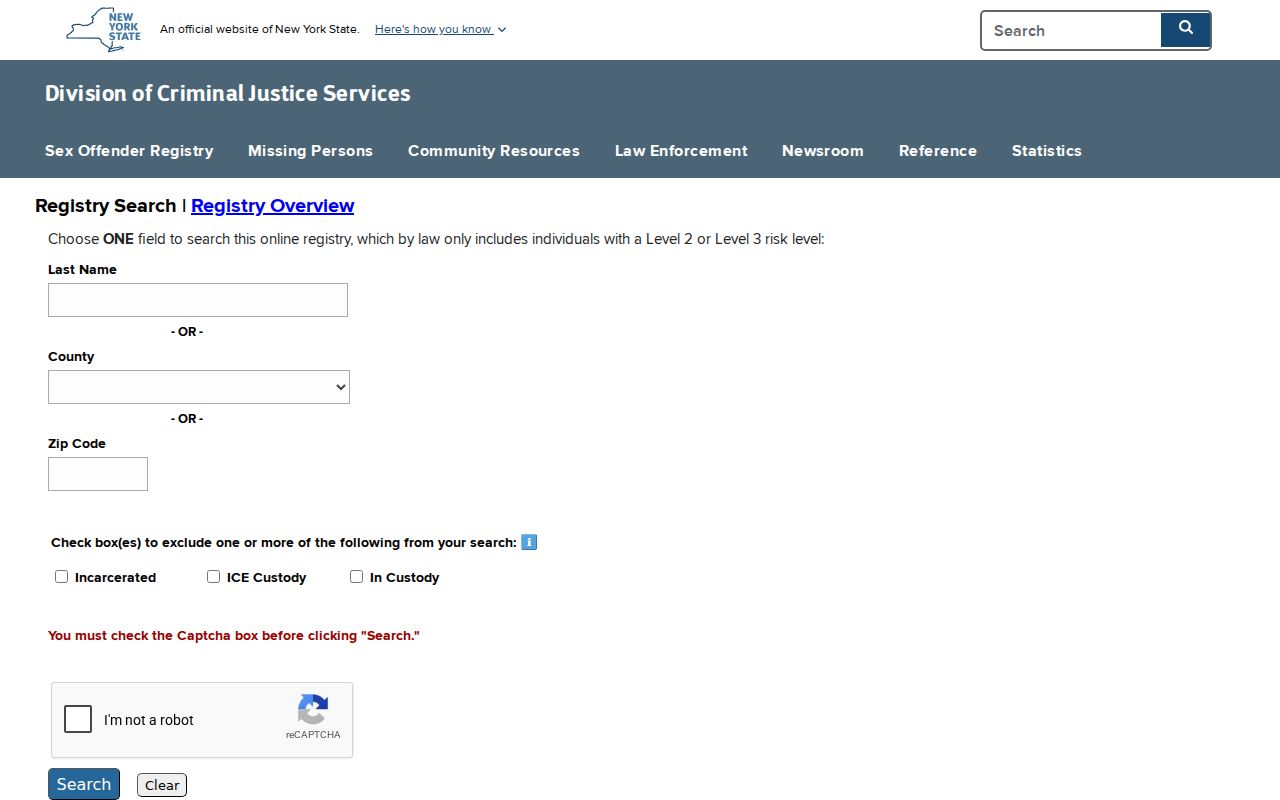
Its county selector is the most direct way to review public Level 2 and Level 3 entries tied to Schenectady County.
Schenectady County and NSOPW
The National Sex Offender Public Website is the cross-state layer. It sends one search across participating jurisdictions, which is useful when the person may have moved or when an address sits near a state boundary. NSOPW does not create a new Schenectady County record. Each result remains governed by the jurisdiction that supplied it, and the source agency's page controls the details and update status.
Use DCJS first for a focused New York inquiry. Use NSOPW when the same name or person may be associated with more than one state. Differences do not always mean an error. Public visibility rules vary, and Level 1 information in New York does not become fully public merely because a national search exists. Return to the linked jurisdiction record before relying on a national result.
The Department of Justice NSOPW interface shows how a national search supplements Schenectady County sources.
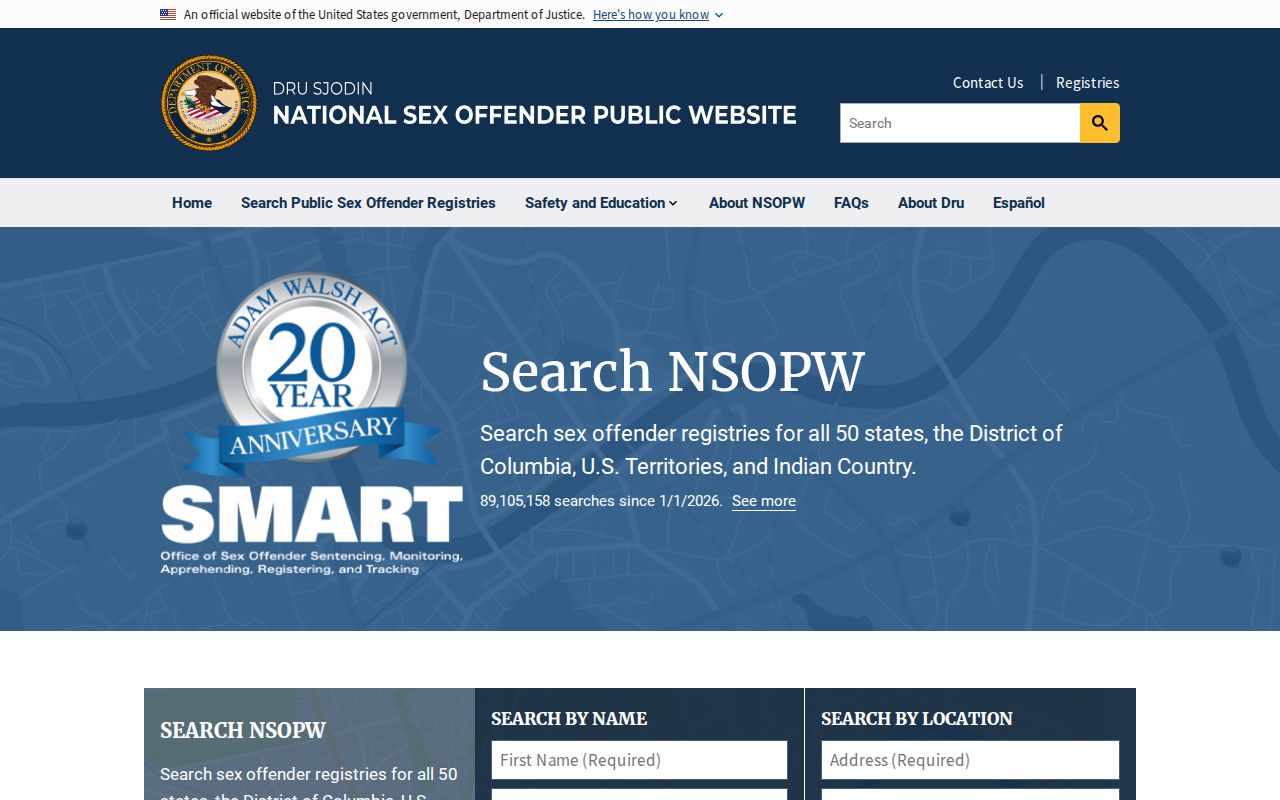
This second layer is most useful for movement across jurisdictions, while DCJS remains the primary New York publisher.
Schenectady County Risk-Level Orders
A Schenectady County registry level begins with a court order, not with a score chosen by the public website. The Board of Examiners of Sex Offenders makes a recommendation, and the court sets the level after the legal process. DCJS then publishes the Schenectady County information that Correction Law Article 6-C permits. This chain matters when a profile changes or a level is under review.
A later court order can affect the Schenectady County level, designation, or duty. Section 168-o provides a route for certain modification and relief requests. The public registry is the notice layer, while the court file is the source for the order itself. A searcher should therefore read the displayed level as a legal category and avoid inventing a broader judgment from it.
Registry Profiles: What They Show
A public profile joins identity clues with the legal basis for registration. Read each field on its own. A current photo helps distinguish people with similar names, while aliases explain why more than one name may appear. Risk level describes the court's assessed risk category. It is not a federal offense tier and should not be treated as a new charge. Address or locality detail appears only to the extent New York law permits.
| Name and aliases | Registered name plus any aliases released by DCJS. |
|---|---|
| Photo and description | Current published photograph, age or date of birth, sex, race, and physical traits. |
| Address or locality | Registered location to the degree allowed for that Schenectady County profile. |
| Offense information | Conviction offense, jurisdiction, statute or description, and relevant conviction or sentence dates. |
| Risk and designation | Level 1, 2, or 3 plus a statutory designation when one applies. |
| Status details | Registration, compliance, reporting jurisdiction, and custody indicators when published. |
| Other public fields | Vehicle, school, work, or identifying marks may appear when state law permits. |
Do not infer facts that the field does not state. A conviction date is not a move date. A reporting jurisdiction is not always the place of the underlying offense. When a profile seems wrong, save its identifying details and contact DCJS or the local registering agency instead of confronting the listed person.
Schenectady County Address Verification
Courts assign a New York risk level after considering the Board of Examiners of Sex Offenders recommendation. DCJS then publishes the part that law makes public. Local law enforcement registers people living in its jurisdiction, receives address changes, and conducts required checks. In Schenectady County, the Sheriff or the police agency serving the person's residence is the sound route for reporting suspected noncompliance.
The strictest recurring address schedule applies to Level 3: every 90 days. Levels 1 and 2 generally verify annually, though other reporting duties and designations can affect a person's obligations. A missed date is a matter for trained officers to check. Note the profile, the date observed, and the basis for concern. Then call law enforcement. Do not visit the location, follow a person, or post an accusation based on a stale page.
Note: The registry record and court order control when a broad summary does not capture a person's full legal status.
Registration Levels and Duties in New York
New York uses risk levels rather than the federal tier labels often seen in other states. Level 1 means low risk, Level 2 means moderate risk, and Level 3 means high risk. Duration may also depend on a designation such as sexual predator, sexually violent offender, or predicate sex offender. A court can later consider relief or modification under Correction Law Article 6-C, including Section 168-o, so a short table cannot replace the controlling order.
| New York level | Public visibility | Usual duration | Verification |
|---|---|---|---|
| Level 1 | Limited; not ordinarily in the same full directory | Generally 20 years unless a qualifying designation requires life | Annual |
| Level 2 | Public directory information | Generally life | Annual |
| Level 3 | Public directory and broader notice | Generally life | Address every 90 days |
These are general rules drawn from the official registry explanation. Conviction date, designation, later court relief, and the exact order can change the result for a specific Schenectady County registrant. DCJS and the court order are the sources to resolve that difference.
Schenectady County Relocation Alerts
The state directory has no radius control, but NY-ALERT provides a separate notice tool. A subscriber can receive email, text, fax, or telephone notice when a Level 2 or Level 3 registrant moves into or out of a chosen area. The service permits up to three areas based on county or municipality, ZIP code, or address. That makes it a better fit for proximity notice than rerunning a ZIP search each week.
Choose Schenectady County for broad notice or use a smaller local area for a more focused stream. An alert reports a registry change; it does not instruct residents to contact the person. Open the linked state record, confirm the status, and use ordinary safety planning. Suspected failure to report a move belongs with police or the Sheriff's Office, not social media.
Using Registry Information Lawfully
Schenectady County registry information supports personal and family safety, informed talks with children, and community awareness. It does not authorize trespass, threats, retaliation, surveillance, or public shaming. A result also should not be stretched beyond the facts shown. The record identifies a statutory registration status and released conviction data; it does not prove a new offense or permit a private person to enforce registration rules.
Misuse warning: Correction Law §168-q governs registry dissemination, and DCJS warns that registry information must not be used to harass, threaten, intimidate, or commit a crime. Misuse can lead to criminal or civil consequences.
If a Schenectady County profile raises a compliance concern, record the public facts and report them to the law enforcement agency that serves the listed area. In an emergency, use emergency services. For a routine issue, use the agency's nonemergency route. Officers can compare the report with information the public cannot see and decide whether follow-up is warranted.